Turin suburbs: how much you can save compared to the centre and where it is best to buy
by Santino Balistreri · · 5 minute read
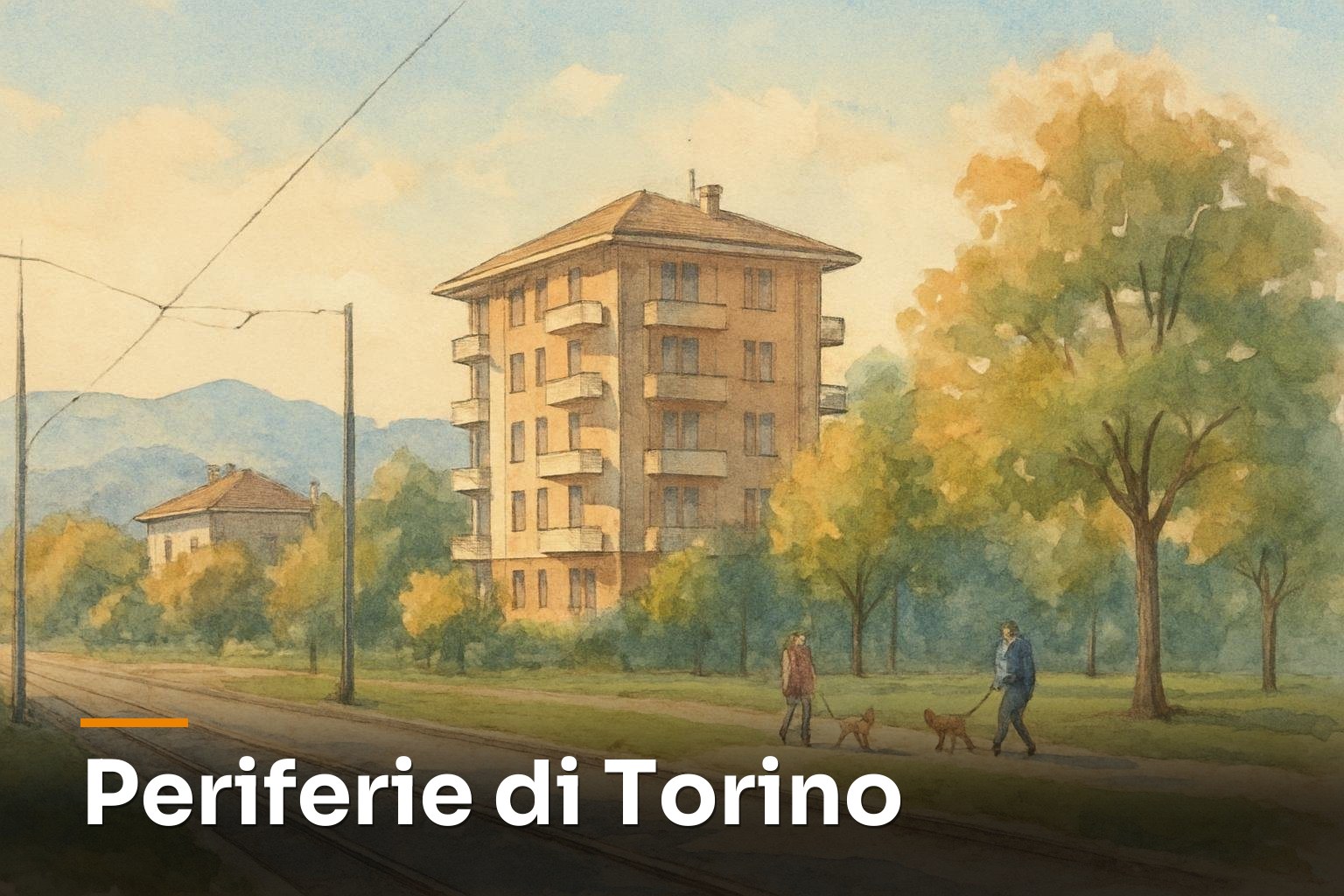
In Turin, the gap between prices in the city centre and the suburbs is among the highest in Italy: buying in outer areas can lead to significant savings, but the choice depends on balancing price, services and appreciation potential. In this article, we look at absolute and percentage savings, which suburban areas of the city offer interesting opportunities, and how to assess the price/services trade-off before deciding.
In brief
- Average saving: in Turin, the difference between centre and suburbs can reach up to 56% on sale prices.
- Indicative values: city centre ~€4,050/m², suburbs ~€1,780/m² (difference about €2,270/m²).
- Rentals: suburbs on average about 38% cheaper than the centre in Turin.
- Decision based on: mobility (metro, tram), local services, additional costs and neighbourhood growth potential.
How much you save in concrete terms
In Turin, the average asking price in central areas is just over €4,000 per square metre, while in suburban zones the average falls to around €1,700–1,800 per square metre. For a 100 m² apartment, the theoretical saving exceeds €200,000 compared to the centre. Rental prices also vary widely: monthly rents can be about 38% lower on average in the suburbs. These figures highlight the economic appeal of outer areas for those seeking larger first homes as well as investors aiming for lower purchase prices.
Where it’s worth buying in the Turin suburbs: areas to consider
The suburbs are not homogeneous: some areas offer connections and services that reduce the 'opportunity cost' of living outside the centre. Here are three area profiles to consider in Turin.
-
Well-connected suburbs: Borgata Parella, Mirafiori Nord and Lingotto
In Turin, districts like Borgata Parella, parts of Mirafiori Nord and areas near Lingotto enjoy tram, bus and metro stops or mobility projects. These neighbourhoods help reduce commute times and maintain steady demand for both rentals and sales, making them attractive for those wanting to save without sacrificing urban services.
-
Residential and peaceful suburbs: Collegno and Grugliasco
Outlying municipalities such as Collegno and Grugliasco often offer larger square metres and green areas, with average prices lower than Turin’s centre. If you have a car or work remotely, these zones can provide excellent space/price value. However, consider travel times and availability of everyday services.
-
Areas with appreciation potential: urban regeneration and new infrastructure
Suburban zones undergoing redevelopment projects or near new public transport stops tend to grow faster than isolated areas. Monitoring municipal plans and public investments allows you to choose areas with stronger medium-term appreciation potential.
Beyond the price: hidden costs and factors to evaluate
Savings on the purchase price are only part of the equation. In Turin, also consider: daily transport costs, time lost commuting, heating and condominium fees (homes outside the centre may have older systems), renovation needs and value of appurtenances like garages or cellars. For investors, consider occupancy rates and average rents: very cheap suburbs can have lower rental demand.
Strategies for buyers and investors
For a first-time buyer in Turin, the suburbs can be the right choice to get more square metres and a garden for the same budget. It is useful to choose neighbourhoods with good mobility and services. For a property investor, it’s wise to calculate the real yield: purchase price, taxes, management costs and potential rent. If the plan is to focus on appreciation, prefer areas with public improvement projects or demographic growth indicators.
For a detailed calculation of yield you can consult our practical guide on how to calculate the real yield of a property in Turin and evaluate the impact of infrastructure like the metro on prices and demand: How to calculate the real yield of a property in Turin e How the metro system changes the real estate market in Turin.
Practical advice for choosing between city centre and suburbs
- Calculate the total cost: add purchase price, taxes, mortgage, transport and renovation expenses.
- Analyse commute times: 30–45 minutes daily can affect quality of life and property value.
- Check local services: schools, healthcare, supermarkets and green spaces influence demand and resale price.
- Assess growth potential: redevelopment projects and new infrastructure reduce depreciation risk.
Frequently asked questions
How much can you typically save buying in the suburbs of Turin?
In Turin, the average declared saving can reach up to 56% compared to city centre prices: concretely, this means over €2,200/m² less than the centre, which on 100 m² could translate into more than €200,000 of theoretical difference.
Is it worthwhile to buy in the suburbs if I work in central Turin?
It depends: if the area is well connected (metro, tram, main bus routes) and commute times remain reasonable, it can be advantageous for space and price. If journeys become long or costly, the initial saving may be negated by travel time and expenses.
Are the suburbs a good choice for investment and renting out?
Yes, but with caution. Suburbs with stable rental demand (near universities, industrial areas or with good connections) offer appealing yields. It's essential to calculate real returns and check property occupancy in the area.
How to tell if a suburb will appreciate over time?
Check the Municipality's urban plans, redevelopment projects, new metro stops or investments in local services. Areas with public and private projects tend to appreciate more quickly.
In summary: in Turin, buying in the suburbs can offer significant savings, but the decision shouldn't be based solely on price per square metre. Consider connections, services, additional costs and the area's growth potential. For a personalised analysis of price/services ratio for a specific Turin area, we can provide a no-obligation expert opinion.
Do you have questions on this topic or about your property?
Talk to us