When it pays to sell in Turin: practical indicators for deciding
by Santino Balistreri · · 5 minute read
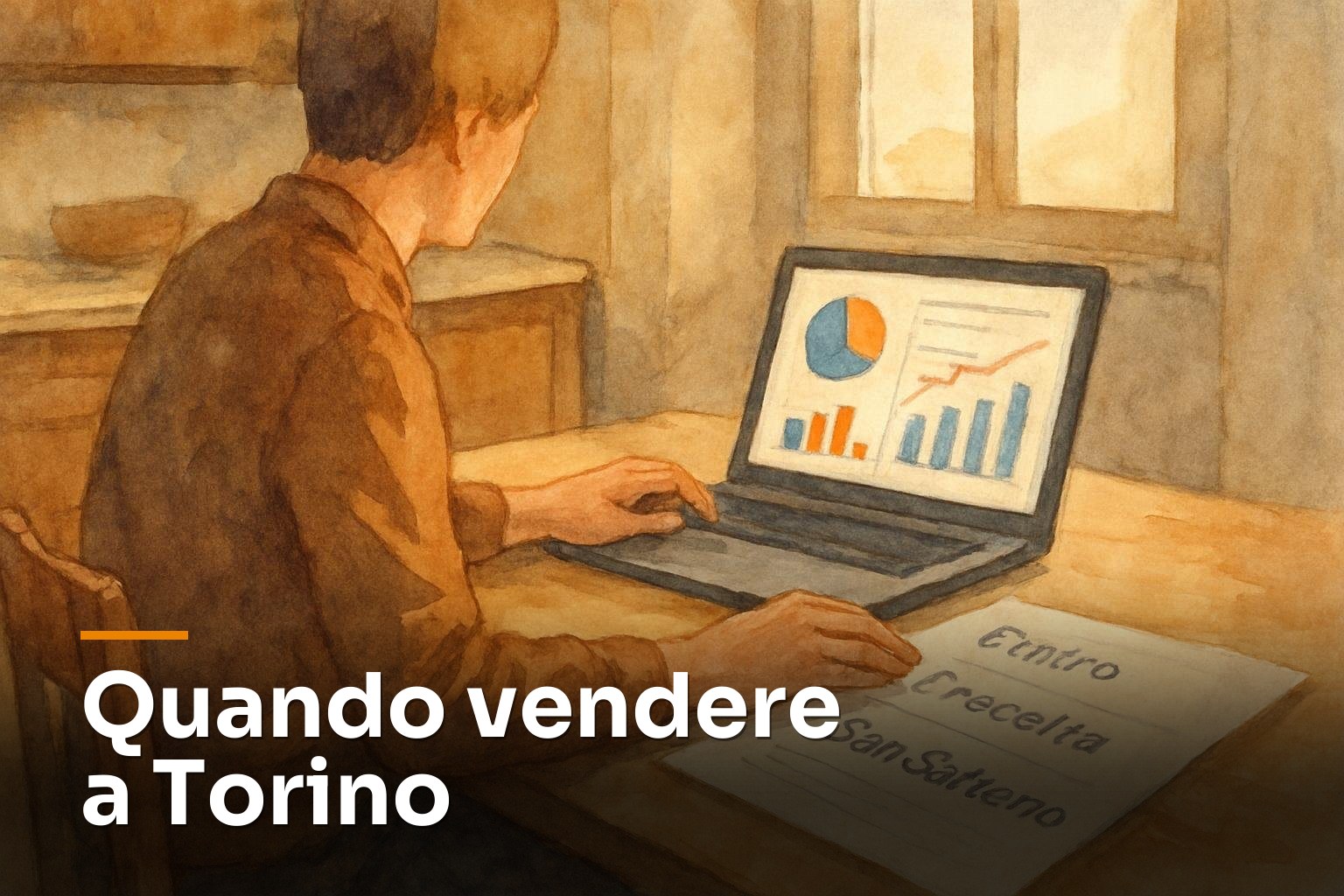
Deciding when to sell a property is often more important than the asking price. In this article, I explain how to recognise local market signals and when it is worthwhile to sell in Turin, with practical indicators that every owner or agent can observe and measure.
In brief
- Average selling time: monitor whether days on the market are decreasing or increasing compared to the typical 3–6 months for apartments in good condition.
- Price trends: sell when local listing prices remain stable or have risen over 6–12 months, avoiding prolonged decline periods.
- Neighbourhood demand: prioritise sales in markets with strong demand (e.g. Centro, Crocetta, San Salvario) and be cautious of suburbs with increasing supply.
- Rates and mortgages: a rapid rise in rates can reduce the pool of buyers; selling before expected increases can be advantageous.
Why timing matters: more than just valuation
In Turin, the value of an apartment depends not only on the square metres and condition but also on when it is brought to market. The same home can sell faster and at a better price during periods of high demand or stagnate for months if liquidity and mortgages become more expensive. Therefore, it is useful to observe concrete indicators: average selling time, listing price variation, number of property viewings and supply level in the area.
Practical indicators to monitor
1) Average selling time (days on market)
Check how many days on average pass before a property similar to yours is sold: this is the most immediate signal. In Turin, a reduction in days on market compared to the historical average signals it is worth selling now; an increase indicates a slower market. Track this value for 3–6 months to identify a trend, not a seasonal peak.
2) Listing price trends
Positive signals include average listing prices rising or remaining stable while sale requests decline. If local prices fall for several consecutive months, it is often better to wait for stabilisation, unless there are personal reasons to sell immediately. For a useful overview, compare recent listings in your neighbourhood and parameters like price per square metre.
3) Supply volume and competition in the neighbourhood
A sudden increase in new listings in the same segment (e.g. two-bedroom apartments renovated in Borgo Po or studio flats for students near San Salvario) increases competition and can compress achievable prices. If supply decreases, your chance to sell well rises. To decide when to sell in Turin, observe how many similar properties appear weekly on main platforms and the quality of listings.
4) Demand by property type and neighbourhood
Some neighbourhoods maintain constant or growing demand: the historic Centre, Crocetta and areas well served by the metro may see more buyers, while suburbs with new building stock could slow down. Understanding which property type is most requested (students, families, investors) helps you choose the best time to sell.
5) Interest rates and credit conditions
Mortgage market rates directly affect buyers’ purchasing power. An upward trend tends to restrict the pool; if excessively high rates are expected to stabilise or rise further, selling beforehand can be advantageous. Conversely, a period with falling rates can widen demand and prices.
6) Microeconomic signs and administrative actions
Public works, new transport lines or ongoing urban redevelopment (for example metro extensions or regeneration projects around Porta Nuova) can increase demand in specific areas. In Turin, urban transformation plans or interventions on roads and services quickly change a neighbourhood’s appeal: assess local news and construction sites before deciding.
How to compile the data: a decision checklist
- Collect data on days on market and price per sqm in your neighbourhood over the last 6–12 months.
- Count new weekly listings for the same property type.
- Evaluate visits to your listings or similar ones (if you are an agent) to gauge real interest.
- Monitor news on rates and urban initiatives impacting the area.
- Decide: sell immediately if most indicators are positive; postpone if signals are worsening.
Practical strategies based on context
If demand is high and supply is low
This is the best moment to sell: focus on a well-presented listing, competitive valuation and swift timing. Also consider private auctions or competing offers.
If prices are stable but interest rates rise
Consider moderate discounts to speed up the sale: a slightly more competitive price can offset the reduction in buyers requiring a mortgage.
If supply increases significantly in your neighbourhood
Targeted renovations, home staging, or including extras (cellar, garage) can make the property stand out. For works and improvements see also our guide on green renovations and on home staging.
Frequently asked questions
How long should I monitor signals before deciding?
Monitor key indicators for at least 3–6 months to avoid decisions based on seasonal peaks. For major sales or high-value properties, it is advisable to extend observation to 6–12 months.
Should I sell before a possible rate increase?
If rates are rising and you expect a significant drop in demand, selling before the next hike can protect the price. Evaluate timing with a consultant if the rise is uncertain.
Is it always better to sell in spring in Turin?
Spring usually sees more activity, but this is not a fixed rule. If local indicators show positive signs at other times, it's worth starting even off-season.
How does the presence of the metro affect the timing of sale?
Properties near metro stops often maintain more stable demand: if the area is involved in transport expansions or improvements, it can be a good time to sell. For more details, read our guide on the metro in Turin.
Practical advice: keep a tracking sheet with days on market, new weekly listings, visits to ads and price changes; make small improvements that increase appeal without major expenses; consider the help of an agent to calibrate the listing price and local marketing strategy. If you want personalised advice on your property in Turin or on specific signals in your neighbourhood, contact us: we can provide a quick, no-obligation analysis.
Do you have questions on this topic or about your property?
Talk to us