Renovating the facade in Turin: deductions, process and practical advice
by Santino Balistreri · · updated on · 4-minute read
Why renovating the facade in Turin is worthwhile
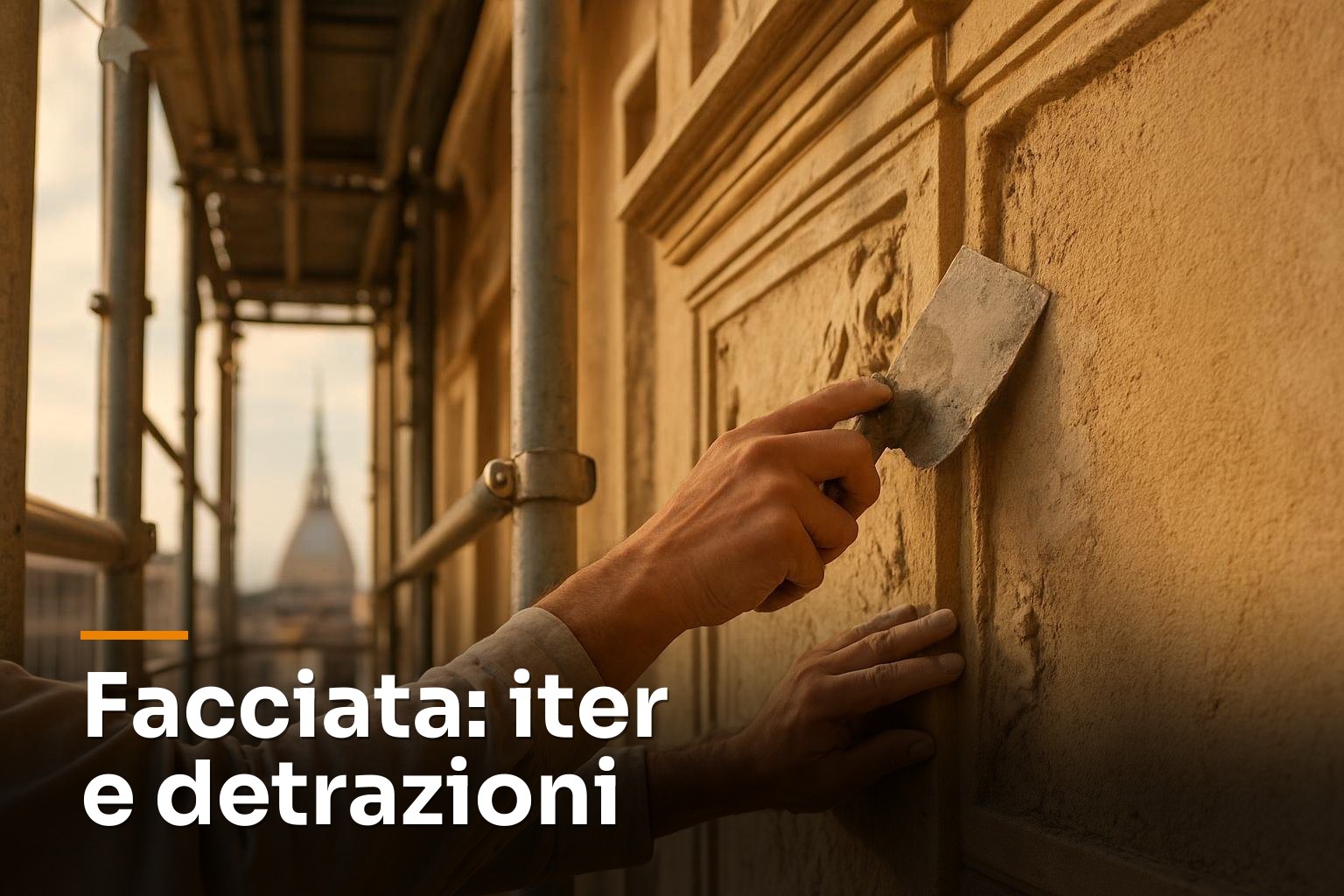
If you are considering renovating the facade in Turin,there are both aesthetic and economic benefits: improved energy efficiency, protection of structural elements and an increase in market value, especially important in central districts like Crocetta, San Salvario, Vanchiglia or in transforming areas like Lingotto. Here we explain the available tax deductions, the local administrative procedure and practical advice to manage the work without surprises.
Applicable tax deductions and incentives
Before starting work, check which incentives you can obtain. Currently, the main options concern tax deductions for renovations and energy requalification. In many cases, replacing the thermal insulation (cappotto termico), renewing the coating with improved insulation or consolidating external parts qualify for income tax reductions. Remember that specific conditions (deduction percentage, duration and required documentation) may vary: keep invoices, bank transfers with detailed notes and technical certifications when necessary.
When the facade qualifies for the renovation bonus or ecobonus
- Renovation bonus: extraordinary maintenance work on common areas or private units that restore or improve the aesthetics and functionality of the facade is often covered;
- Ecobonus: interventions that improve energy performance (e.g. external insulation, cladding) may qualify for different percentages and specific technical requirements;
- Other local incentives or regional calls: Piedmont or the Municipality of Turin may periodically issue grants for restoring historic heritage or urban redevelopment; check with municipal offices or the Regional website.
Authorisation process in Turin: requirements
Every intervention on the facade requires compliance with national laws and municipal regulations. Here are the typical steps to follow:
- Preliminary check: assess the property condition, presence of restrictions (cultural heritage, protected areas) and condominium obligations if involving common parts.
- Design: hire a registered professional (surveyor, architect or engineer) to draft the project and, if needed, the energy certification.
- Permits and notifications: for extraordinary maintenance or restoration you may need to submit a CILA or SCIA to the Municipality of Turin; historic buildings require authorisation from the Superintendence.
- Notifications: for works on street facades, temporary site signs and compliance with safety and urban decor rules are usually required.
- Final inspection and documentation: at the end of the works, gather all documentation to claim deductions (receipts, certifications and communications to ENEA if required by the ecobonus).
Timing and local bureaucracy
The Municipality of Turin offers urban planning tools and regulations that can affect timing: procedures for historic buildings or projects altering the exterior appearance require thorough reviews. Expect longer times for approvals linked to architectural constraints or condominium work. A local expert knows the process and can reduce avoidable delays.
Technical choices and practical advice
Besides bureaucracy, technical considerations are essential to achieve a lasting result and, where possible, access deductions:
- Choose materials compatible with the building: in historic centres, prefer breathable and reversible solutions to respect traditional stratigraphy.
- Consider thermal insulation where useful: besides improving comfort and bills, it increases the building’s energy efficiency.
- Check structural parts: cracks, plaster degradation and damp problems should be resolved before aesthetic refurbishment to avoid repeated work.
- Plan future maintenance: durable paints and finishes reduce medium-term costs.
- Organise the site: if working downtown (e.g. along Corso Vittorio or Via Po), arrange scaffolding and pedestrian paths according to municipal requirements.
Enhancing the property after the works
A renovated facade can significantly enhance appeal and sale or rental price, especially in Turin's most sought-after districts. For an updated valuation of post-renovation value, it can be useful to consult local professionals or guides on setting sale prices in Turin and cadastral checks before selling.
For more insights on market value after renovations and the necessary documentation before selling, also consult our guides on how to evaluate the selling price in Turin and on cadastral and urban planning checks before selling.
Practical advice and conclusion
In summary: before renovating the facade in Turin, check possible incentives, conduct a thorough technical assessment, entrust design and paperwork to local professionals, and keep all documentation for tax deductions. Be mindful of historical restrictions in central districts and plan the site to minimise disruptions and penalties. Finally, focus on interventions that combine durability and energy efficiency to maximise return on investment.
If you want personalised advice on your property in Turin — from checking available incentives to estimating the value after works — contact us: we can recommend professionals and steps to follow to proceed with confidence.
Also read
Do you have questions on this topic or about your property?
Talk to us